
Top 10 3D configurator vendors for building-materials brands
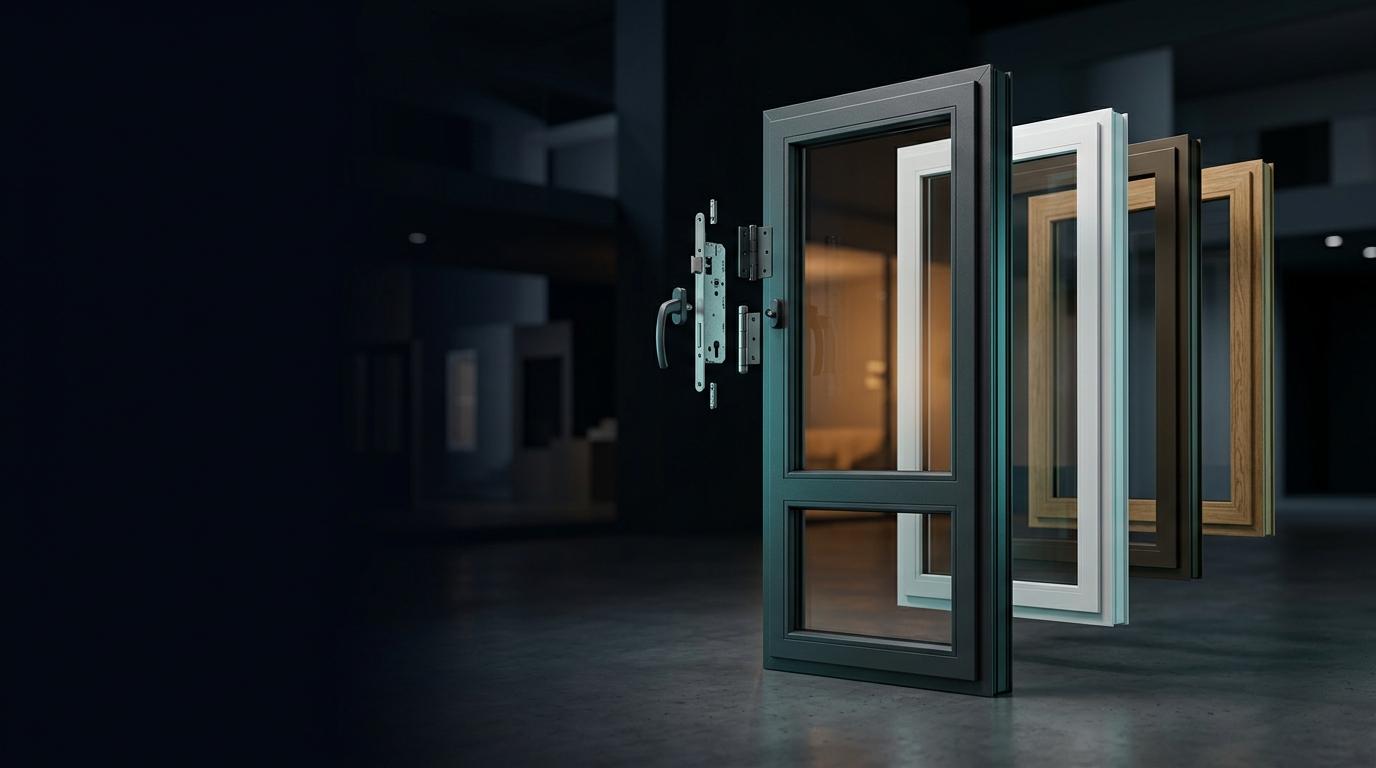
The short answer: a visualizer for surfaces, a configurator for built-to-order products, a CPQ when the quote has to reach the plant
Hire Chameleon Power or Renoworks when your product is a surface — paint, siding, roofing, flooring — and the job is showing it on the buyer's own house or room; hire Threekit or Epicor CPQ when your product is built to order — windows, doors, drainage systems, portable buildings — and the configurator has to produce a valid quote and a drawing for the plant; hire Expivi or VividWorks when the same tool has to sit inside an ecommerce storefront and an ERP at once; and hire a custom studio such as the Culver City team at #5 or the Danish CGI studio at #9 when your product rules, your dealer model or your visual standard do not fit a platform. None of the platforms on this list publishes a price; the only vendor here with public brackets is the custom studio, which starts at $10,000–50,000 for a first build. The reason to do this now: 67% of B2B buyers say they prefer a rep-free buying experience (Gartner, 2026 survey of 646 B2B buyers), and 73% of B2B decision-makers are comfortable placing orders above $50,000 online, up from 59% in 2022 (McKinsey Global B2B Pulse, about 4,000 decision-makers, May 2026). A configurator is how a window, siding or flooring brand lets that buyer reach a price without waiting for a rep to call back.
How this list was built: fit to the building-materials job first, and three things we deliberately ignored
The job we ranked against is narrower than "3D configurator." A building-materials brand sells through a long channel — manufacturer to distributor, distributor to dealer or big-box retailer, dealer to contractor, contractor to homeowner — and the person configuring the product is rarely the person who pays for it. The tool has to work for a homeowner on a phone, a contractor at a kitchen table and a dealer's estimator at a desk, and hand its result to whichever system that channel runs on: a lead form, a retailer's cart, a dealer quote or an ERP order.
Building products also split into two different configuration problems. Surfaces — paint, siding, roofing, flooring, tile, countertops — are sold by the gallon or the square foot, have shallow option trees and one hard question: what will this look like on my house? Built-to-order units — windows, doors, garage doors, folding glass walls, sheds, drainage systems, insulated panels — have deep option trees, dimensional and code rules, thousands of valid combinations and a different hard question: what exactly is the plant going to build, and what does it cost? A vendor that is excellent at one problem is usually mediocre at the other, and the list reflects that.
Four criteria decided who made the cut. First, building materials or home improvement had to be a named industry on the vendor's own site, with at least one named customer in the category — window, door, roofing, flooring, insulation, paint or a home-improvement retailer — rather than a generic "any product" claim. Second, the vendor had to offer at least one of the three tool types in the second table below. Third, every fact in the entries had to be on the vendor's site or Clutch listing when we checked on September 20, 2026; where a figure is not published, the table says "not published" instead of an estimate. Fourth, the mix had to span exterior visualizers, configurator platforms, CPQ systems, a CGI studio, a design-to-manufacture suite and a custom development shop, because those are six different purchases.
Three things were deliberately ignored. Headcount and funding rounds, because a platform with $65M raised and a studio with forty engineers can both ship a working window configurator. Logo walls, because a retailer logo says a vendor once sold to that retailer, not that the tool is live on a product page today. And the word "AI" in the tagline, which by 2026 appears on nearly every site here and separates nothing.
The order is by fit to the building-materials job, not by size. Surface visualizers come first because they are the most category-specific tools here, then the built-to-order platforms, then the storefront-plus-ERP platforms, then the studios and suites whose value depends on how much of the work you want to own. The custom studio sits in the middle on purpose: it is not the default choice for a brand that fits a platform, and it is the right choice for a brand that does not. One number frames why the handoff matters more than the picture: 69% of B2B buyers report inconsistencies between what a supplier's website says and what its sellers tell them (Gartner, 2025 survey of 632 B2B buyers). A configurator that shares one rules engine with the quote is the direct fix.
Comparison table: what each vendor publishes about focus, budget, timeline and region
Budget and timeline columns contain only figures the vendor publishes — pricing page, Clutch listing or homepage brackets. "Not published" means exactly that; it does not mean cheap or expensive. Nine of the ten vendors ask you to request a quote, which is normal for this category: expect a discovery call, a catalog review and a proposal rather than a plan picker.
| # | Company | Focus | Budget range | Timeline | Region |
|---|---|---|---|---|---|
| 1 | Chameleon Power | Surface visualizers (paint, flooring, doors, materials) on real or sample scenes for manufacturers and retailers | Not published | Not published | USA |
| 2 | Renoworks | AI home-exterior visualization (siding, roofing, paint) on photos of the actual house; 3D and measurements | Not published | Not published | US and Canada |
| 3 | Threekit | 3D/AR visual configuration and CPQ for manufacturers; "AI sales agent" over Salesforce/Oracle CPQ and ERP | Not published | Not published | Chicago, USA; London, Ottawa, Paris, San Francisco |
| 4 | Epicor CPQ | Visual CPQ (2D/3D/AR) with rules engine, CAD and drawing automation for engineered-to-order products | Not published | Not published | Americas, Europe, ANZ |
| 5 | Todor3D | Custom-built configurators and 3D web experiences (WebGL, Three.js, React Three Fiber, WebAR/WebXR); custom software, AI | $10,000–50,000 / $50,000–100,000 / $100,000–250,000+ (published brackets) | 4–10 weeks / 3–6 months / 4–12 months (published) | Culver City, California; teams on three continents |
| 6 | Expivi | 3D configuration plus CPQ plus ERP integration, API-first and headless, for manufacturers and retailers | Not published | Not published | Netherlands |
| 7 | VividWorks | Cloud 3D configurator and visual CPQ; furniture, kitchen and bath, lighting, building supplies | Not published | Not published | Oulu, Finland; worldwide |
| 8 | 3D Cloud | 3D configurators, room planners, WebAR and AI chat configuration for home-improvement and furniture retail | Not published | Not published | St. Petersburg, Florida; Ohio; London |
| 9 | Cadesign form | CGI studio: product imagery, configurators, digital showrooms, BIM/CAD files for building materials and furniture | Not published | Not published | Denmark and the Nordics |
| 10 | Cyncly | Design-to-manufacture software for kitchens, bath, flooring, windows and doors (Winner Flex, 2020 Design, FeneVision, RFMS) | Not published | Not published | 24+ country sites; HQ not stated |
The first table tells you who publishes what. The second tells you which kind of tool you are actually buying, because "3D configurator" is used on vendor sites for three products that behave, cost and fail differently. Most building-materials brands need one of these first and a second within two years; the mistake is buying the wrong first one.
| Tool type | What the user does | What it outputs | Where the rules live | Vendors on this list | When it is the wrong tool |
|---|---|---|---|---|---|
| Exterior or surface visualizer | Uploads a photo of a house or picks a sample scene, then swaps siding, roofing, paint, flooring or a door | An image, a saved project, a lead with product selections; sometimes a measured material estimate | Almost none; the catalog is colors and textures, not dimensions | Chameleon Power, Renoworks; room-scene tools at 3D Cloud | Product has dimensional options or a price that depends on configuration |
| 3D product configurator | Assembles a specific product from real options — size, glazing, hardware, finish — and sees it in 3D or AR | A cart line, a spec sheet, a saved configuration, a rendered image; a price if the pricing is simple | In the configurator's rules engine, usually maintained by the brand | Threekit, Expivi, VividWorks, 3D Cloud, custom builds by the Culver City studio and Cadesign form | Quote needs an approved drawing, dealer-tier pricing or engineering validation before it is valid |
| Visual CPQ | A rep, dealer or self-serve buyer configures, and the system prices, validates, quotes and generates drawings and a bill of materials | A quote document, a BOM, a CAD drawing, an ERP order | In the CPQ, synchronized with ERP pricing and engineering rules | Epicor CPQ, Threekit (with Salesforce/Oracle CPQ), Expivi, VividWorks; Cyncly on the design-to-manufacture side | Consumer-facing browsing on a retailer's site, where a CPQ's rigor slows the experience down |
A practical way to read the second table: a paint brand needs the first row and probably never the third; a window brand needs the second row for the homeowner and the third for the dealer, and the two should share a rules engine; a drainage or insulation manufacturer may need the third row only. The vendor conversation gets much shorter once you know which row you are in.
The ten vendors: what each does, a representative project, when to pick them and when not to
1. Chameleon Power
Chameleon Power builds visualization software for home-improvement manufacturers and retailers: the tools that let a shopper paint a wall, lay a floor or swap a garage door on a photo of a real room or a sample scene. A "20 years" claim on its site puts the founding around 2004; it is US-based, though the contact page did not state a city when we checked. Under the hood it runs a proprietary Color Logic Engine for matching paint and material colors, an embeddable responsive web visualizer, and a simulation engine for rendering surfaces onto scenes. It also describes a graphics staff "larger than most agencies," which matters: a surface visualizer is only as good as the library of scenes, swatches and textures behind it.
Representative work: the "Paint On" tool for Sherwin-Williams and Lowe's, plus visualizers for Overhead Door, MAPEI and Forbo Flooring's Marmoleum line, all listed on chameleonpower.com. Paint, garage doors, grout and flooring are exactly the categories where the buyer's question is "what will this look like in my space," not "which of 4,000 combinations is valid," and the Lowe's tie-in shows the tool living where a surface product is actually sold.
Pick Chameleon Power when your product is a surface sold by the square foot or the gallon, your channel is a big-box retailer or your own brand site, and the goal is color and material selection with a lead form or a sample order at the end. When not to: if the product is built to order with dimensional rules, pricing logic and a spec sheet that has to reach a plant, a surface visualizer is the wrong tool, and you will end up bolting a configurator onto it. Pricing is not published.
2. Renoworks
Renoworks Software, Inc. has been building home-exterior visualization since 1999, and the current product is AI-powered: a homeowner, a contractor or a manufacturer's rep uploads a photo of the actual house, and the tool previews siding, roofing and paint on that photo, with 3D models, measurements and an integration with EagleView aerial measurement data. The company serves the US and Canada; its site does not state a headquarters city.
The customers on the homepage are contractors rather than manufacturers — Titan Roofing, AA Metal Roofing and Colorado Home Exteriors give the testimonials — and that tells you where the tool earns its keep. A siding or roofing brand licenses Renoworks so that its contractor network can close at the kitchen table with a picture of this house, not a brochure, and so that the manufacturer captures the lead and the product selection along the way. The measurement layer turns the picture into a material estimate, which is the moment a contractor starts caring.
Pick Renoworks when you make exterior products — siding, roofing, exterior paint, windows as seen from the curb — and your revenue depends on contractors and dealers who need a selling aid more than a cart. It is the most specialized vendor on this list, and for its category that is the recommendation.
When not to: if your catalog is interior surfaces, cabinetry or built-to-order units with pricing rules, or you need a configurator that drops a line into an ecommerce cart or an ERP order, look at the platforms lower on this list. Pricing is not published, and the homepage evidence is contractor testimonials rather than manufacturer case studies, so ask for a brand-side reference with lead-volume figures.
3. Threekit
Threekit, Inc. is headquartered in Chicago, with offices in London, Ottawa, Paris and San Francisco; the company dates to 2005, and the current business took shape when its founders joined in 2016. Founder Ben Houston is described as a Three.js contributor, which shows in the platform's roots: 3D and AR product visualization and configuration for manufacturers. In 2026 the homepage frames the product as an "AI sales agent" that turns a buyer's requirements into a valid configuration and a quote through existing CPQ, ERP and commerce systems — Salesforce CPQ, Oracle CPQ and Configure One are the named integrations. The site claims 150+ manufacturers deployed, $65M raised and ISO 27001 certification.
For building-materials brands the representative account is Andersen Windows & Doors, on the homepage beside Sloan (plumbing fixtures) and Ulrich Lifestyle Structures (sheds and outdoor buildings); Kohler, Bobcat, Milwaukee and Steelcase appear as logos. Threekit's own figures come with a caveat: it reports a 95% increase in website leads when Andersen customers engage with the AI sales agent, 4× faster quoting at Sloan and a 290% revenue increase within one month of launch at Ulrich (Threekit homepage, 2026; vendor data, single-customer anecdotes with no baseline given). Its estimate that catalog complexity costs a manufacturer "$3M annual revenue loss" (same page; method not disclosed) is vendor framing, not a benchmark.
Pick Threekit when the product is built to order, the combinations run into the thousands, and you already run a CPQ or an ERP that the configurator has to obey. Windows and doors are the textbook case, and the Andersen account is the reference to ask about. When not to: for a paint or flooring brand that needs a room-scene visualizer, this is more platform than the job needs; pricing is not published, and the "150+ manufacturers" positioning signals that contracts are sized for enterprises.
4. Epicor CPQ
Epicor CPQ, formerly KBMax, is the configure-price-quote product inside Epicor Software Corporation. It combines 2D, 3D and AR visual configuration with a rules engine, CAD and drawing automation for AutoCAD, SolidWorks and PTC Creo, and integrations with Salesforce, Teamcenter, Magento and MuleSoft over REST APIs. Epicor sells across the Americas, Europe and Australia and New Zealand; the product page does not state a headquarters.
The customer stories on the product page read like a building-products trade show: NanaWall Systems (folding glass walls), Johns Manville (insulation and roofing), Advanced Drainage Systems (pipe and stormwater), Graceland Portable Buildings, plus iKon Boats and School Specialty. The common thread is engineered-to-order products where the configurator's most valuable output is the drawing and the bill of materials, not the picture.
Epicor publishes aggregated results — +108% annual sales, +105% deal size, +40% conversion rate, +38% faster sales cycles, +26% of reps achieving quota — and claims that visual configuration in 3D, AR and VR "boosts conversion rates by up to 40%" (Epicor CPQ product page, 2026). These are marketing aggregates with no methodology, so read them as "Epicor claims." A more grounded data point comes from Nucleus Research's July 2024 ROI case study of manufacturer CMTP: a 53% ROI, a 2.4-year payback, more than $200,000 in annual time savings and a 66% increase in quoting efficiency, with the customer describing quote turnaround falling from about two days to "five, 10 minutes max" (Nucleus Research, 2024, and an Epicor customer quote; single company). That is the order of magnitude a dealer-driven window or door brand should expect from a working CPQ, and the 2.4-year payback is the honest timescale.
Pick Epicor CPQ when a quote must carry an approved drawing, when reps and dealers quote more than homeowners do, and when Salesforce or an Epicor ERP is already in place. When not to: if you need a consumer-facing visualizer on a retailer's site, or you have a small catalog with a handful of options, a full CPQ is heavier than the job; pricing is not published.
5. A Culver City studio building custom configurators from published brackets
Todor3D is a custom development studio rather than a platform: it builds configurators and 3D and immersive web experiences on WebGL, Three.js, React Three Fiber and WebAR/WebXR, alongside custom software engineering and AI solutions. Founded in 2020, it lists 40+ engineers across three continents, 300+ projects delivered, and 25 reviews with a 5.0 rating on Clutch; its US presence is in Culver City, California. What separates it from the rest of this list is that it publishes its brackets: projects at $10,000–50,000, $50,000–100,000 and $100,000–250,000+, with timelines of 4–10 weeks, 3–6 months and 4–12 months. For a buyer who has just read nine "request a quote" pages, a published range is a planning tool in itself.
The building-materials-adjacent example is a closet configurator listed on the studio's site in the $10,000–50,000 bracket with a four-month timeline. That is a millwork-style problem — modules, dimensions, finishes, a layout that has to fit a real wall — and close to what a cabinet, closet-door or shelving brand would need. A jewelry configurator sits in the same bracket on the same page, so the configurator work is not tied to one category. The studio does not publish any building-materials manufacturer by name, so ask for one.
Pick the studio when a platform's data model does not fit your product logic — regional code rules, dealer-specific pricing, an unusual handoff to an existing ERP — or when you want to own the code rather than rent a subscription and your team can maintain it. A custom build also makes sense when the configurator is one piece of a larger system, such as a dealer portal or an internal estimating tool, because the same team can build both.
When not to: a custom build means you own the maintenance too, and the studio was founded in 2020, so the track record is shorter than the twenty-year vendors on this list. If your need is a standard exterior visualizer or a room-scene tool with a large scene library, a specialist platform will get there faster and with less of your product team's time.
6. Expivi
Expivi describes its product as an "all-in-one product configuration platform": 3D visualization plus CPQ plus ERP integration for manufacturers and retailers, delivered API-first and headless so the front end can be whatever your storefront already is. The company is in the Netherlands; the city is not stated on the site. Named integrations are Magento, Salesforce, Sana Commerce, SAP, Shopify, Shopware and WordPress, wide enough that most building-materials commerce stacks are covered without custom middleware.
The building-materials name on the logo wall is Kingspan, the insulation and building-envelope group; Big Green Egg, Ralph Lauren, L'Oréal and Buster & Punch sit beside it. The detailed case studies come from other categories: Crocs (custom shoes with automatic manufacturing output), Eduard trailers (100,000+ combinations) and Kimberly Clark (automated print files). Read those as evidence of two capabilities that transfer directly to building products: handling six-figure combination counts without the rules engine falling over, and generating a manufacturing file from the configuration rather than just an image.
Pick Expivi when you sell configurable products through an existing ecommerce storefront and an ERP, and you want the configurator to sit between the two without replacing either. Insulated panels, doors, gates, fencing, modular building components and anything with a "configure, then produce" workflow fit the pattern, and the headless approach suits brands with a strong in-house web team.
When not to: Expivi's public building-materials evidence is a logo, not a case study, so ask for a category reference with numbers before you sign. If you have no storefront and no ERP to connect — a brand selling purely through dealers with paper quotes — the integration strength is wasted. Pricing is not published.
7. VividWorks
VividWorks, based in Oulu, Finland and founded in 2006, runs a cloud 3D product configurator and visual CPQ: the buyer designs, visualizes and prices a customizable product online, with 3D rendering, AR and VR output and rule-based configuration behind it. Building supplies are one of the four industries on its site, next to furniture, kitchen and bath, and lighting. Customers listed include BoConcept, HAY, Louis Poulsen, Montana, Ideal Keittiöt (kitchens) and Supra Cabinets; the company serves customers worldwide and notes Japanese-language support.
The kitchen and cabinet customers are the relevant signal for a building-materials brand. Cabinet configuration is dimensional, rule-heavy and price-sensitive — a run of cabinets has to fit a wall, respect appliance cut-outs and price by the linear foot — and a rules engine that handles it can handle doors, windows, storage systems and closet interiors. VividWorks has a pricing page, but the tiers were not captured when we checked, so the table says "not published" rather than a number we could not confirm.
Pick VividWorks when you want a platform with two decades of work in modular, rule-based products, a consumer-facing front end that ends in a price, and AR as part of the package. It is a sensible middle option between the enterprise CPQ vendors and the ecommerce-first platforms.
When not to: no named building-supplies customer appears on the site, only the industry page, so ask for one. If the job is a photo-based exterior visualizer for contractors, this is the wrong category of tool, and if the quote must carry engineering drawings, Epicor or Threekit are the more natural fit.
8. 3D Cloud
3D Cloud — formerly Marxent — is headquartered in St. Petersburg, Florida, with offices in Miamisburg, Ohio and London. Its platform covers WebAR, 3D configurators, room planners, 360-degree panoramas and an AI chat-based configuration product it calls DesignWithMe.ai, with kitchen and bath, closets, outdoor and decking, and office among the named categories. Customers on the homepage: Macy's, Joybird, La-Z-Boy, MillerKnoll, Lowe's, John Lewis, Ashley and Kingfisher; the company works in the US, UK, EU, Australia and New Zealand.
Two of those names — Lowe's and Kingfisher — are the home-improvement retailers where a building-materials brand's products actually get sold, and decking and kitchen planners are the room-scale tools those retailers put in front of shoppers. A deck planner is a configurator in disguise: board lengths, railing systems, stair options and a material list at the end.
Pick 3D Cloud when your product is sold through a home-improvement retailer's planner, when the buying decision is room-scale rather than single-product, or when AR "see it in your yard" is part of the sale. The AI chat configuration is a genuine differentiator if you believe shoppers will describe what they want rather than click through menus, though it is early enough that you should ask for usage figures.
When not to: the platform's center of gravity is furniture and interiors, not exterior products or engineered-to-order units, and the customer list has more retailers than manufacturers. If your channel is dealers and contractors rather than retail, or your quote needs drawings, look elsewhere. Pricing is not published.
9. Cadesign form
Cadesign form is a CGI studio that combines 3D and AI: product images, lifestyle visuals, films, product configurators, digital showrooms and BIM/CAD technical files, for furniture, kitchen and bath, industrial and building-materials clients. Its homepage client list includes Saint-Gobain and Lindab on the building side, Grundfos and Danfoss in industry, and Fritz Hansen, BoConcept, HTH and Louis Poulsen in furniture and kitchens. The studio operates from Denmark and the Nordics; its site mentions multiple offices without itemizing them.
The BIM piece is the differentiator on this list. Architects and specifiers select building products through BIM objects long before a homeowner or contractor sees a configurator, and a studio that produces the BIM/CAD file, the catalog imagery and the configurator from one master asset closes a gap that platform vendors mostly leave open. For an insulation, ventilation or roofing-system manufacturer, the specifier channel may matter more than the consumer channel, and that is the case Cadesign form is built for.
Pick Cadesign form when you need the assets as much as the tool — a product library modeled to a visual standard, technical files for specifiers, film and imagery for the catalog, and a configurator built on the same models. It is also the right call when your existing product renders are inconsistent and the configurator would only expose that.
When not to: it is a studio, not a subscription platform. There is no self-serve product, no published price, and the work is project-priced, so a brand that wants a configurator on a retailer's site next quarter will find a platform faster. The building-materials references are logos, not published case studies, so ask for one with a scope and a timeline.
10. Cyncly
Cyncly is the design-to-manufacture software group formed from the merger of 2020 Technologies and Compusoft, and it carries a shelf of brands: 2020 Design, Winner Flex, Spaces Flex, Design Flex, 3CAD, FeneVision, Mozaik and RFMS ERP. The group claims 70,000+ businesses in more than 100 countries and runs country sites for 24+ markets, from the US, UK and Australia to Germany, France, India, Brazil and South Africa. Its categories are kitchens, bathrooms, furniture and cabinets, flooring, and windows and doors; the site does not state a headquarters, and the pages we fetched reference customer stories without naming them.
For a building-materials brand the relevant products are FeneVision, which serves window and door manufacturers, RFMS, an ERP for flooring businesses, and the kitchen and bath design tools that dealers and retailers use to sell cabinetry and surfaces. The angle is different from every other vendor here: Cyncly is not primarily a tool you put on your brand site, it is the software your dealers and fabricators may already design and quote in, and getting your catalog inside it is a distribution decision as much as a technology one.
Pick Cyncly when your dealers already work in its design tools and your priority is being specifiable and orderable inside their workflow, or when you are a window, door or flooring business that needs design, quoting and manufacturing in one suite. When not to: it is a design-to-manufacture suite, not a consumer configurator; pricing is not published, and there is no named building-materials case on the fetched pages, so a brand that needs a homeowner-facing tool on its own site should look at the platforms above.
How to choose for your own project: six questions that separate a demo from a system
Every vendor on this list can show a good demo. The questions below reveal whether the demo becomes a system that your dealers, your plant and your web team will still be using in year three. Ask them in the first call, and put the answers in the proposal.
1. Which of the three tool types is this, and can it become the other two later?
Make the vendor place their product in the second table above. A surface visualizer that "also does configuration" usually means color swaps; a CPQ that "also does 3D" usually means a static render per option. The follow-up matters more: if you start with a visualizer for homeowners, what does it take to add dealer quoting later — a module, a second product, a different vendor? Brands that skip this question buy twice.
2. Where does the rules engine live, and who maintains it?
Window and door rules change every season: a new glazing option, a discontinued hardware finish, a code change in one state. If the rules live in the configurator and your ERP has its own copy, the two drift, and you end up with the inconsistency 69% of B2B buyers already complain about (Gartner, 2025). Ask whether the configurator reads rules from your ERP or CPQ, whether your product team can edit them without a vendor ticket, and what happens to saved configurations when a rule changes.
3. What exactly does the configurator hand off?
List the outputs you need and make the vendor demonstrate each: a lead with selections, a retailer cart line, a dealer quote PDF, a bill of materials, a CAD drawing, a cut list, an ERP order. The gap between "we integrate with SAP" and "a configured order lands in SAP with the right part numbers" is where most projects lose their second six months. The CMTP case above — two days to ten minutes per quote — was a handoff result, not a rendering result.
4. How does it handle the dealer and contractor layer?
Building products are sold through territories, price tiers and installer networks. Ask how the tool routes a homeowner's configuration to the right dealer, whether dealers see their own pricing, whether a contractor can save and edit a customer's design, and who owns the lead. Gartner's finding that buyers who use a supplier's digital tools together with a rep are 1.8× more likely to complete a high-quality deal than buyers going it alone (Gartner B2B buying-journey research) is the argument for building the rep and the dealer into the flow rather than around it.
5. Who builds the 3D assets, and what does a new SKU cost?
A configurator is a front end for a library of models and materials, and building products come in large catalogs. Ask who produces the models, in what format, from what source (CAD, photography, scans), and the price per additional SKU or finish. For scale, outsourced product modeling starts from $42 per model at Modelry's published rate (Modelry pricing page, 2026, "from" price; complex products quoted individually), so a 400-SKU door line is a five-figure asset budget before any software is licensed. Ask, too, whether the models can be reused for BIM objects, catalog imagery and AR, or whether each channel needs its own set.
6. What does the page weigh, and how does it load on a contractor's phone?
The median web page already weighs 2,652 KB on desktop and 2,311 KB on mobile (HTTP Archive Web Almanac 2024), and a single uncompressed 3D model can equal that on its own. Ask for the size of a typical configured product in the browser, whether geometry is compressed (Draco cut a Khronos sample model's geometry from 7.6 MB to 0.82 MB in Cesium's 2018 benchmark) and what the load time is on a mid-range phone over cellular, because that is where a contractor opens it. Renault measured a 13% conversion lift for every one-second improvement in Largest Contentful Paint across 10 million visits (web.dev case study, 2021, single brand).
What to send the vendor before the first call, so that the proposal is a proposal and not a brochure:
- Your product classes: which are surfaces, which are built to order, and roughly how many SKUs and finishes in each.
- Your channel map: brand site, retailer sites, dealer portals, contractor tools, and which one the configurator launches on first.
- The systems the result must reach: CRM, CPQ, ERP, ecommerce platform, with names and versions.
- The rules that make a configuration invalid, with examples, and who maintains them today.
- What 3D or CAD assets already exist, in what formats, and who owns them.
- The outputs a finished configuration must produce: lead, cart line, quote, drawing, BOM, order.
- Your budget bracket and the date the first product line has to be live.
A vendor who reads that list and asks good questions about item four is the vendor to shortlist. A vendor who answers with a generic demo has told you what they are.
FAQ: what building-materials buyers ask before hiring a configurator vendor
How much does a 3D configurator cost for a building-materials brand?
The only published brackets on this list are a custom studio's: $10,000–50,000, $50,000–100,000 and $100,000–250,000+, with a closet configurator listed at the low bracket over four months. The nine platforms do not publish prices. For context, Clutch reports a typical software project at $10,000–49,000 and an average engagement of $132,480 (Clutch pricing guide, data updated September 2026, client-reported), and GoodFirms' 2026 survey of 100+ software companies puts small-to-mid custom projects at $30,000–100,000 and large ones at $100,000–200,000. Add 15–25% of build cost per year for maintenance (GoodFirms 2026 app cost survey) and a per-SKU asset budget on top.
What is the difference between an exterior visualizer and a 3D configurator?
An exterior visualizer shows your product on a photo of the buyer's house; a configurator assembles a specific product from real options and produces a spec. Renoworks and Chameleon Power are visualizers: the catalog is colors and textures, the output is an image and a lead, and the rules are shallow. Threekit, Expivi and VividWorks are configurators: the catalog is dimensions, hardware and finishes, the output is a cart line, a quote or a BOM, and the rules decide what the plant can build. A siding brand needs the first; a window brand needs the second, often with a CPQ behind it.
Can a configurator connect to our ERP or CPQ?
Yes, and for built-to-order products it should, because the rules and prices have to match what the plant and the reps use. Epicor CPQ connects to Salesforce, Teamcenter, Magento and MuleSoft; Threekit works through Salesforce CPQ, Oracle CPQ and Configure One; Expivi names SAP, Salesforce, Magento, Sana Commerce, Shopify and Shopware; a custom studio builds against whatever API you have. The question is not "do you integrate" but "does a configured order land in our system with correct part numbers," demonstrated on your data.
Do we need 3D models of every SKU?
Not on day one, and for surface products you may never need true 3D. A visualizer works from textures and photographed swatches; a configurator needs models for the components that change shape — frames, panels, hardware — and can treat finishes as materials applied to the same geometry. Start with one product line, model its components once, and budget per additional SKU: human-made product models start from $42 each at Modelry's published rate (Modelry pricing page, 2026), and generated meshes are cheaper but usually need cleanup before a configurator can use them.
How long does it take to launch a configurator?
The one published timeline set on this list is the custom studio's: 4–10 weeks for a small scope, 3–6 months for a mid-size build, 4–12 months for a large one, with its closet configurator listed at four months. Platform vendors do not publish timelines, and in practice the calendar is set less by software than by your side: catalog cleanup, rules documentation, asset production and integration testing with your ERP. A brand that arrives with clean product data and existing CAD files is on the short end of any vendor's range; one that has to build both is on the long end.
Do configurators actually increase sales for window, door and siding brands?
The vendor evidence says yes, with caveats. Threekit reports a 95% increase in website leads at Andersen Windows & Doors and 4× faster quoting at Sloan (Threekit homepage, 2026, vendor data); Epicor claims up to 40% higher conversion from visual configuration (Epicor product page, 2026, no methodology), and the independent-analyst view of one Epicor customer is a 53% ROI with a 2.4-year payback (Nucleus Research, 2024). On the consumer side, shoppers who viewed a product in 3D were 44% more likely to add it to cart in Shopify's Rebecca Minkoff case study (Shopify blog, 2020–2021 data, single brand). Treat these as directional, and measure your own lead quality and quote turnaround from the first month.

 English
 Arabic
 French
 Spanish
 Portuguese
 Deutsch
 Turkish
 Dutch
 Italiano
 Russian
 Portuguese (Brazil)
 Greek